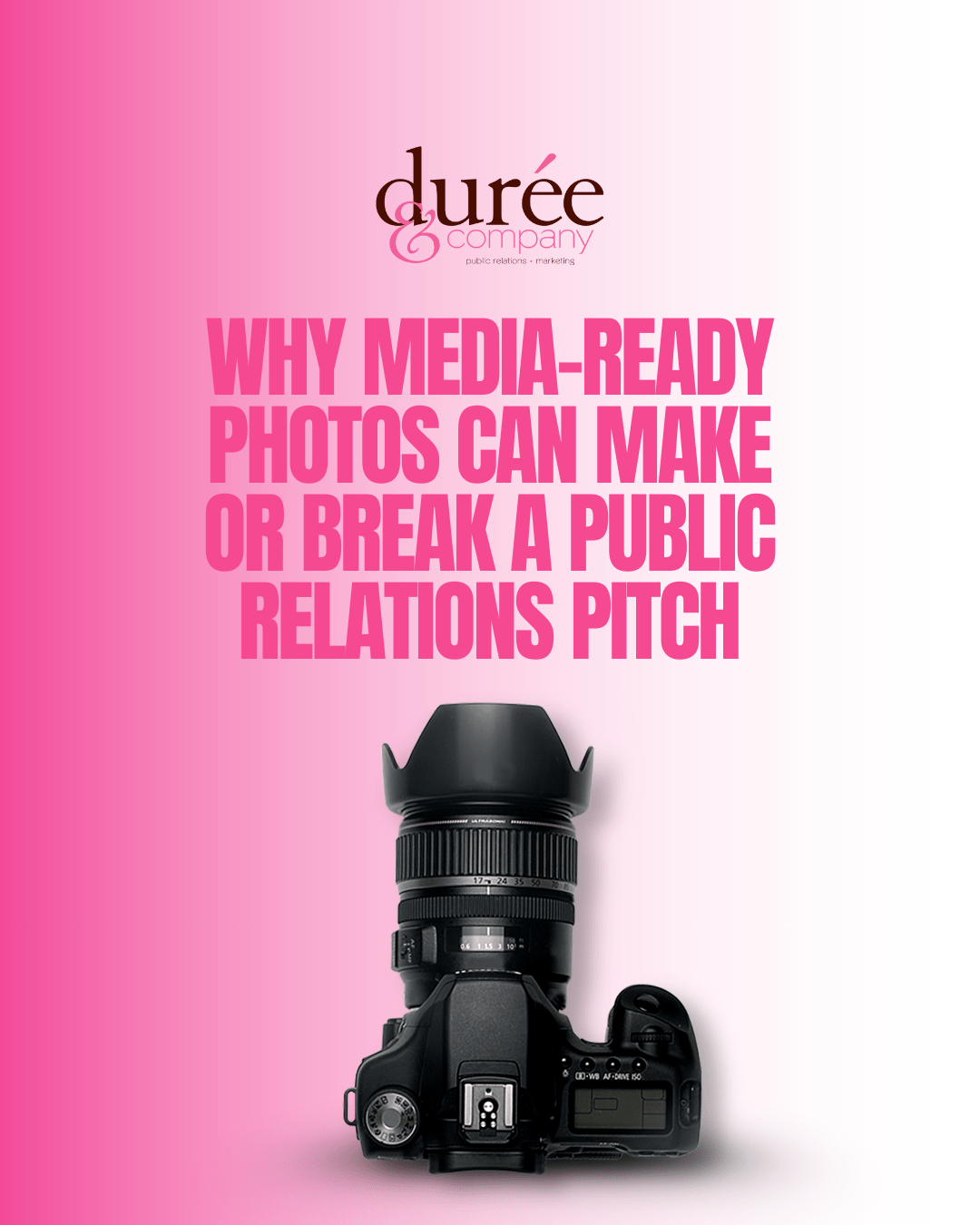
Media-ready photography is an important part of successful public relations. While a strong pitch and compelling story angle matter, the images included with a submission often determine whether a journalist can move forward with coverage.
At Durée & Company, media relations experience across industries has shown that many promising story opportunities are missed because the images provided are not suitable for editorial use. A photo may look polished from a marketing perspective yet still be unusable for a journalist preparing a story.
Understanding what makes an image media-ready can significantly improve the likelihood of earning coverage.
Marketing visuals and editorial images serve different purposes
A common challenge in media pitching is the confusion between marketing graphics and editorial photography.
Marketing assets often include logos, event details, promotional text or branded graphics. These visuals work well for social media, advertising, event calendars and promotions, but journalists typically cannot run images that appear promotional within editorial coverage.
Editorial outlets usually require clean photographs that illustrate the story rather than promote the brand. Images showing a location, product, business owner, or behind-the-scenes moment provide context while maintaining editorial neutrality.
Screenshots and social media images often lack the quality media requires
Images pulled from social media posts or marketing graphics are often compressed and too small for editorial use.
While they may look strong in a social feed, journalists often need images that can be resized or cropped for websites, newsletters and print. Providing the original high-resolution image ensures the photo maintains the quality needed for publication. For media use, images should be at least 300 DPI at a minimum size of approximately 5×7 inches, ensuring they can be resized or cropped without losing clarity. It is also recommended to provide a selection of at least five to ten images to give journalists options depending on layout, format and story needs.
What journalists actually need from photos
Editors and reporters work under tight deadlines and often choose sources that provide materials ready for immediate use.
When submitting images to accompany a pitch, journalists generally need:
- High-resolution original photos
- Images delivered via Dropbox or Google Drive – not within the body of the email or attached
- No watermarks, logos or promotional text within the image
- Clear photographer credit
Providing these elements makes it easier for journalists to incorporate the photo into their story without additional editing or follow-up.
Avoid over-editing images before sending them to media
Another common issue occurs when images have been heavily edited through social media apps or filters before being shared with journalists. Tools such as Facetune or other mobile editing apps are designed for social media, but they often compress images and reduce the original file quality.
While these edits may look appealing on a phone screen, they can lower the resolution of the original photograph and make the image unusable for editorial publication. Media outlets typically require high-resolution photos that can be resized or cropped for different layouts. For this reason, it is always best to provide the original image file from the photographer rather than a version that has been filtered, resized or exported from a social media platform.
Organize and label media assets clearly
How files are labeled can also make a difference when sharing materials with journalists.
Editors frequently manage multiple images, documents and quotes at once. When files lack clear labeling, it can slow down the editorial process.
Saving image files with the names of the individuals pictured and the photographer’s credit can be helpful, but this approach is not always practical, especially for group photos or event coverage. Instead, include a separate caption document that corresponds with each image file, clearly identifying individuals from left to right or by number, along with the correct photographer credit. This keeps files organized while making it easier for editors to accurately caption and credit images without confusion.
Preparing media-ready assets in advance
Providing the right images may seem like a small detail, but it can influence whether a brand is included in editorial coverage.
Durée & Company regularly works with clients to prepare both promotional graphics and clean editorial images suitable for media use. Having both available allows brands to respond quickly when journalists request photos.
Durée & Company has previously shared additional guidance on this topic in the blog Top 8 Tips for Submitting Photos to Media, which outlines best practices for image resolution, file formats and photographer credits when pitching journalists.
Visual assets help tell the story
Strong photography helps bring stories to life. Journalists often rely on images to illustrate an article, highlight a product or introduce readers to a brand or business.
By providing clean, high-quality editorial photos alongside a strong pitch, brands make it easier for journalists to feature their story. In many cases, having the right image available at the right time can make the difference between securing coverage and missing the opportunity.
Durée & Company works closely with clients to ensure their media materials, from story angles to visual assets, are prepared to meet editorial standards and support successful media outreach.
Organizations seeking to strengthen their media visibility and ensure their press materials are truly media-ready can contact Durée & Company at 954-723-9350 or visit our website to learn more about the firm’s public relations and media relations services.
About Durée & Company, Inc.
Founded in 1999, Durée & Company is a full-service, well-respected and highly creative public relations and marketing agency serving a diverse client base of local, national and international consumer brands, landmark industries, business leaders and philanthropists from its offices in Fort Lauderdale, Florida and Aspen, Colorado. Practice areas include nonprofit, hospitality, business, lifestyle, health and wellness, legal, real estate, yacht and marine as well as cannabis, psychedelics, and other emerging industries. Durée & Company is a member of PR Boutiques International™ (PRBI), a global network of nearly 40 independent, owner-led public relations agencies spanning five continents. In 2025, the agency was named Fort Lauderdale Magazine’s Best PR Agency for the third consecutive year, and its founder, Durée Ross, was recognized as a “Media Industry Champion” at PRNEWS’ Top Women Awards. To learn more, call 954-723-9350; go to dureeandcompany.com;cannabismarketingpr.com; or psychedelicpr.com. Join the social conversation and follow Durée & Company on Facebook, Instagram, Twitter,YouTube and LinkedIn at @DureeCoPR.